Start with an investment thesis. Discover possible assets or public-market opportunities, test the commercial and financial evidence, then identify the people and routes that can move a decision forward.
EXAMPLE BRIEFFind consumer and retail businesses in a target region that fit our size, growth and ownership criteria. Show what is verified, what remains unknown and who can discuss the opportunity.
TWO DIFFERENT INVESTMENT JOBS
A target list is only the start of diligence.
A private-market buyer asks whether an asset fits a mandate and is accessible. A public-market investor asks whether a dated operating signal changes an earnings or risk thesis. Both need a traceable route from observation to decision.
PRIVATE EQUITY · FAMILY OFFICE · CORP DEV
Screen an acquisition thesis.
Define sector, geography, size, ownership and control criteria.
Resolve the brand, operating companies and filed accounts.
Test footprint, cash generation and growth requirements.
Distinguish a possible asset from an owner willing to sell.
HEDGE FUND · PUBLIC EQUITY TEAM
Test a company thesis.
Start with the security, catalyst and reporting period.
Build an operating signal from stores, jobs, stock, prices or reviews.
Compare with peers and company disclosures.
Ask whether the signal can reach revenue, margin or cash flow.
Buyer
Decision on their desk
What they already have
Where ALREADY can add value
Hedge fund PM / analyst
Change, hold or reject a public-company thesis before the next catalyst.
A dated retail operating signal with a peer test and explicit bridge to earnings; show when the signal adds nothing.
PE / family office
Which asset deserves deeper diligence or an owner conversation?
Deal platforms, advisers, bank introductions, data room after access.
Resolve fragmented local entities and test network economics before spending on full diligence.
Corporate development / M&A adviser
Which target or buyer matches a live mandate and can be reached lawfully?
Internal shortlist, CRM, industry relationships.
Find justified additions and exclusions, then map the authorised route to the decision maker.
The hedge-fund workflow is grounded in how managers use multiple alternative data sources, as described by AIMA, and in the CFA Institute account of external signals complementing financial analysis. The buyer rows are our market hypotheses, not a list of contracted customers.
One standard of proof.
Every number carries entity, geography, period, unit and source. Contrary evidence stays in the memo. A contact route does not imply an asset is for sale; an operating anomaly does not imply a tradable return.
RESEARCH CASE · POLISH GROCERY
Dino vs Biedronka: a signal that survived the first check.
A public-market research question: is labour pressure becoming a store-execution and margin risk? Our September 2026 analysis compared the two chains with filings, workforce disclosures, peer benchmarks, official vacancies and labour evidence.
What the evidence actually says
PUBLIC DATA · SEP 2026
3,033Dino stores at year-end 2025; employee count grew slightly faster than the store network over 2020–25.
17,195Non-employees used by Biedronka during 2024, up 25.2% year on year.
Not provenThat workforce pressure caused lower sales per store or a margin decline at either chain.
Chain
Signal
Counterevidence
Next data required
Dino
Labour-dispute event risk and rising employee turnover.
Headcount kept pace with the expanding network; like-for-like sales stayed positive in H1 2026.
Store-level staffing, queue/availability data and comparable sales by cohort.
Biedronka
Material reliance on external labour in core store and distribution work.
Own-employee turnover fell; reported EBITDA margin improved in 2025.
Comparable 2025 Biedronka-only external labour and store-level operating outcomes.
The useful result was a sharper question: which workforce signals are leading indicators, and which cannot yet be connected to earnings?
BUY-SIDE SCREEN · HOW WE WOULD SOURCE A POLISH CHAIN
Do not confuse a supermarket network with an available deal.
A request to acquire a Polish grocery network would begin with a mandate and a legal-entity map, then move through financial and operating filters before an approach to the owner or adviser. The public Dino/Biedronka analysis above is a public-equity operating study, not proof that either network is for sale.
1 · MandateControl or minority; store count; EBITDA; geography; debt; format.2 · UniverseBanner, owner, subsidiaries, franchise mix and relevant transactions.3 · DiligenceFiled numbers, store economics, labour, competition and growth levers.4 · AccessOwner or adviser route, process status, consent and next conversation.
WHAT OUR RETAIL EXPERIENCE ADDS
The operating reality behind a multiple.
We can examine store density, openings and closures, local competitors, labour, stock and customer experience before a buyer commits to full diligence. Market-entry analysis then tests whether the network's proposed expansion is executable, including format, capital and local operating constraints.
WHAT IS STILL UNKNOWN
Availability is a separate fact.
Public accounts do not reveal seller intent, deal terms, confidential unit economics or a fund's internal underwriting. A company only becomes a qualified transaction opportunity after these are established through the authorised process.
This is a proposed screening method. The cited Polish research tested operating risk in listed chains; it did not document an acquisition, seller mandate or completed transaction.
THE FOUNDER'S SIDE OF THE SAME SEARCH
Which funds fit my business and round?
Describe the company, stage and amount you want to raise. Compare actual investment mandates and cheque sizes before looking for the right person and a credible route to them.
My startup sells inventory-planning software to fashion retailers in France. We are raising €2m. Which funds fit our stage and cheque size, and who is the right partner to approach?Ask your question
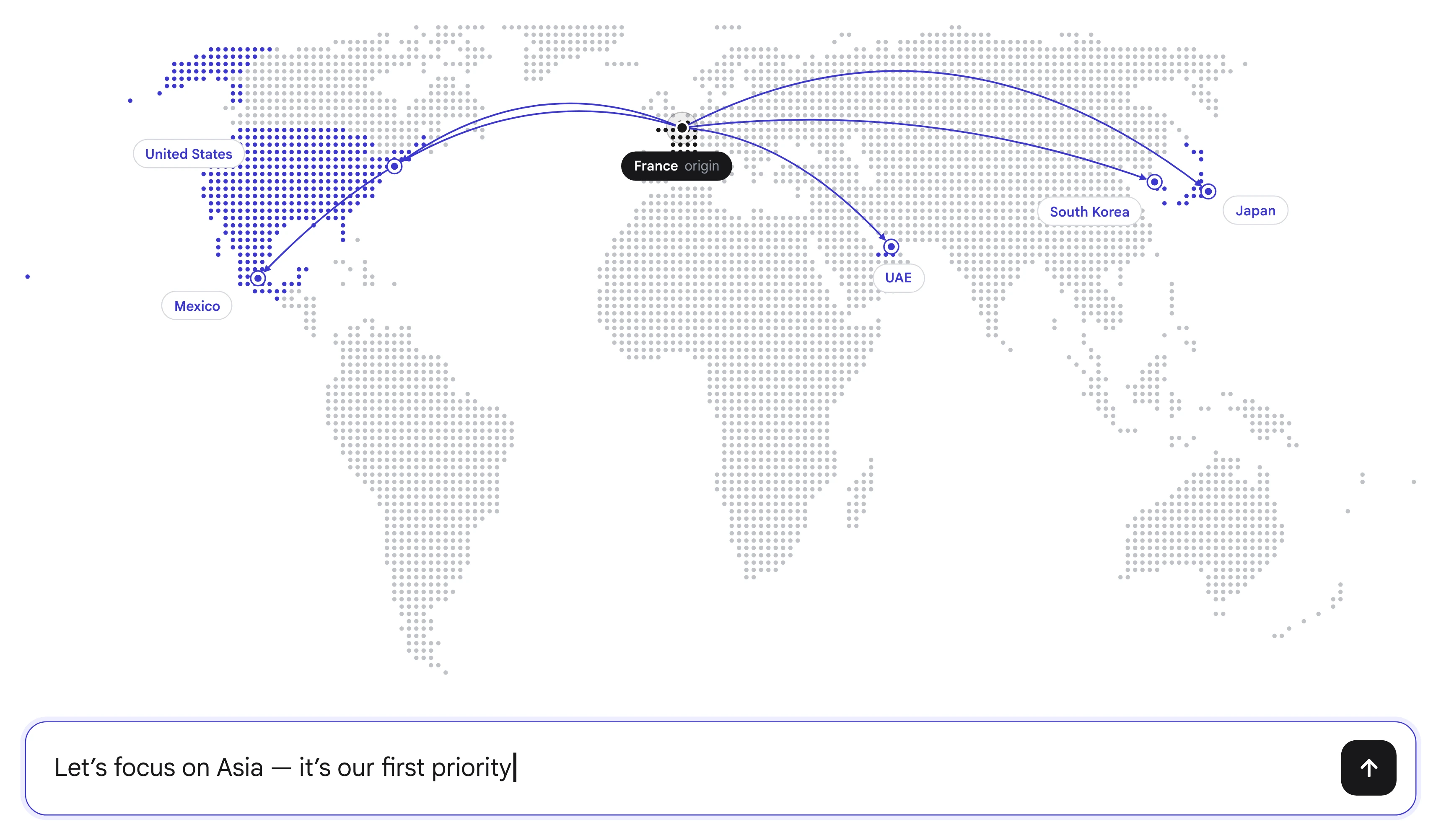
Illustrative ecosystem map. These are startup hubs, not recommended funds or ALREADY partners. Fund fit and introductions require a separate mandate check.
THE WORKFLOW
From an objective to the next decision.
01
Define the thesis
Set sector, geography, size, financial thresholds, risk limits and the decision deadline.
02
Find and qualify
Bring together company, ownership, filing, market and operating signals. Explain why each candidate fits or fails the brief.
03
Map the route
Identify owners, management, advisers or an official process. Keep a possible route separate from confirmed access.
04
Advance the decision
Prepare a focused question or diligence brief. Record what the conversation changes in the investment view.
WHAT YOU GET
A sourced opportunity shortlist with fit, gaps, priority and a verified next step for each candidate.
WHAT THIS DOES NOT CLAIM
A screen is not investment advice, an available asset or proof that the owner wants to transact. Financial and operating conclusions depend on the data available for that asset.
Bring a real growth brief. See the evidence and the next route in one workspace.